Exercise progression for an older adult, moving from very light → moderate, focused on safety, function, and independence rather than athletic performance.
🟢 Stage 1: Very Light / Starting Point
(For beginners, pain, fatigue, or recent inactivity)
Goals
-
Wake up joints and muscles
-
Improve circulation
-
Build confidence
Examples
-
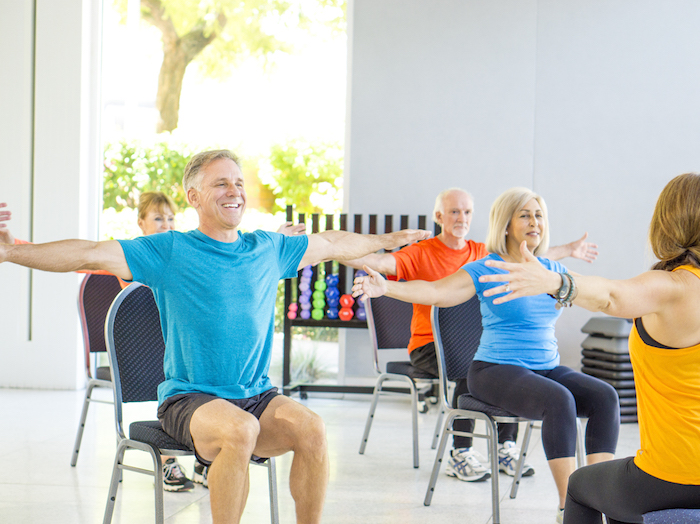
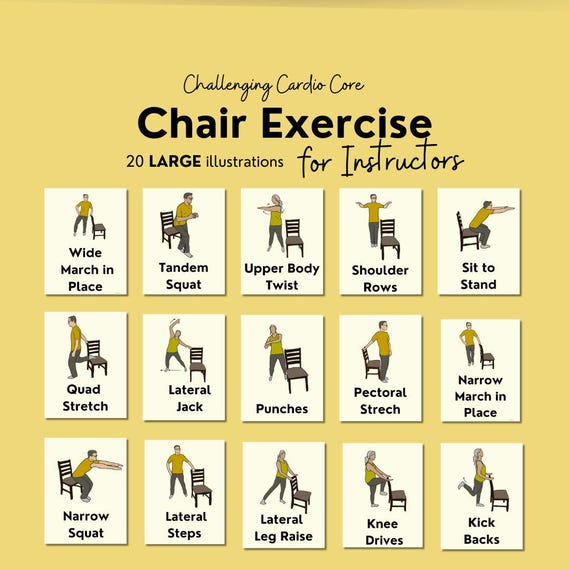
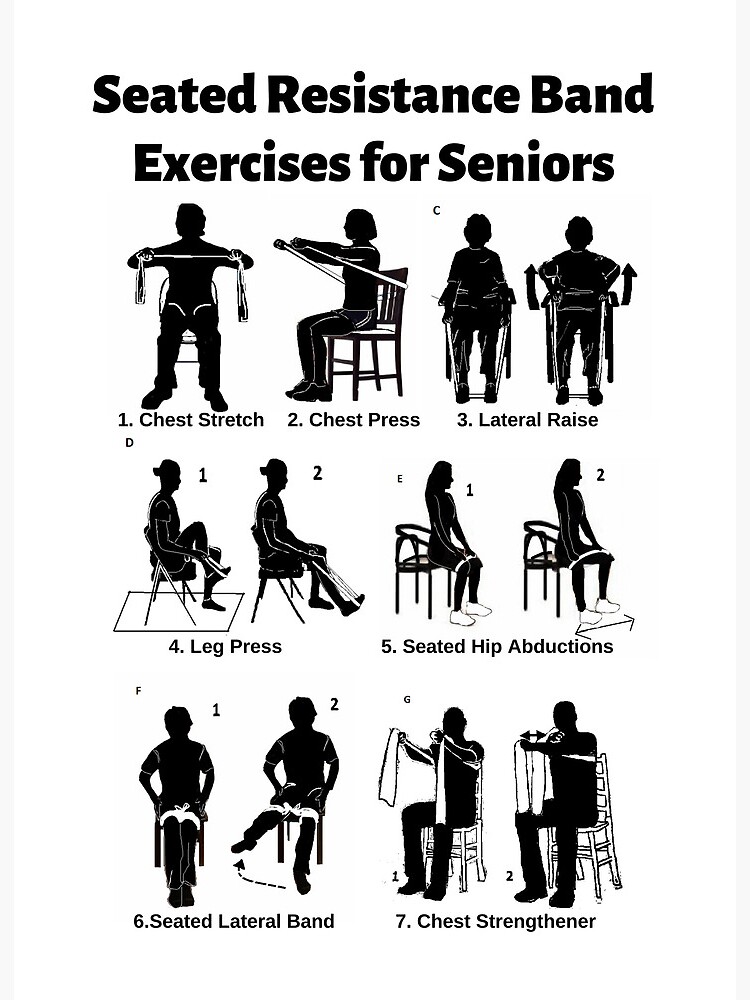
Seated leg lifts
-
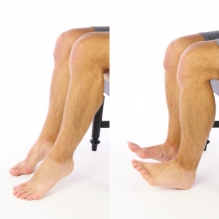
Ankle pumps
-
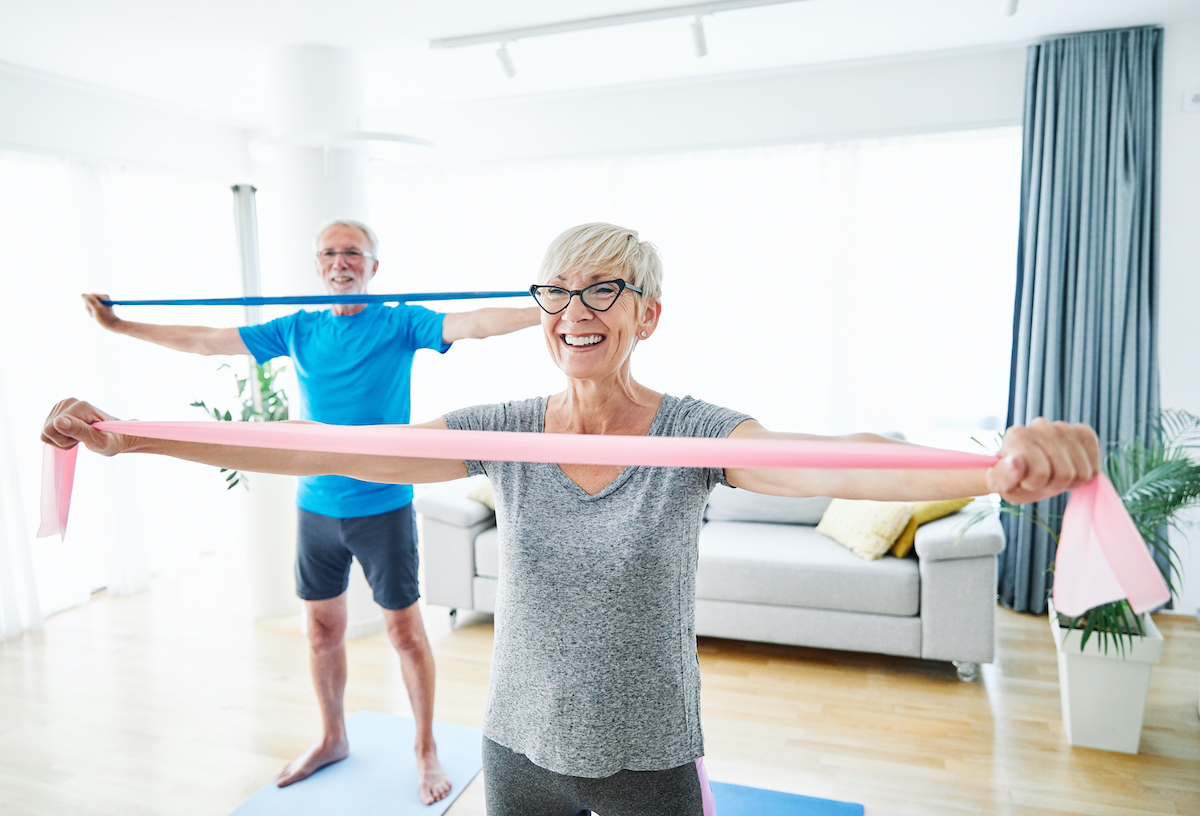
Light resistance band pulls
-
Gentle range-of-motion movements
✔ Evidence shows even seated movement improves circulation, joint health, and glucose control in older adults.
🟡 Stage 2: Light but Functional
(When daily movement feels easier)
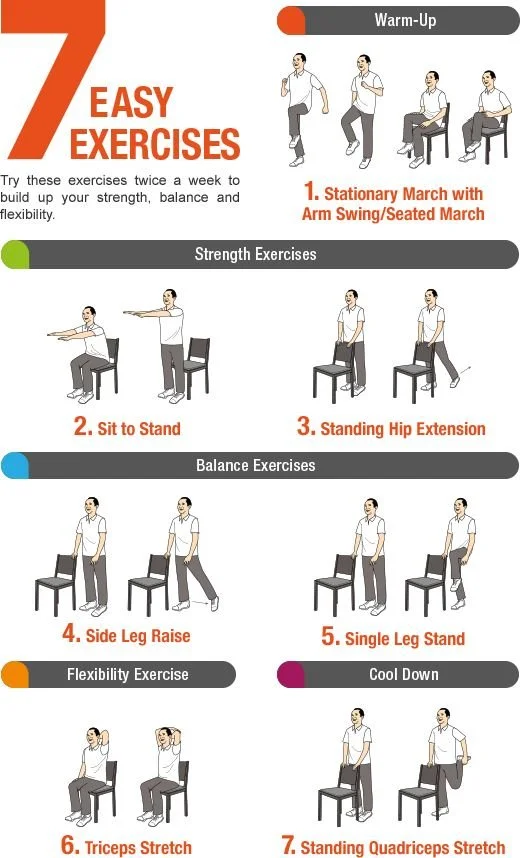
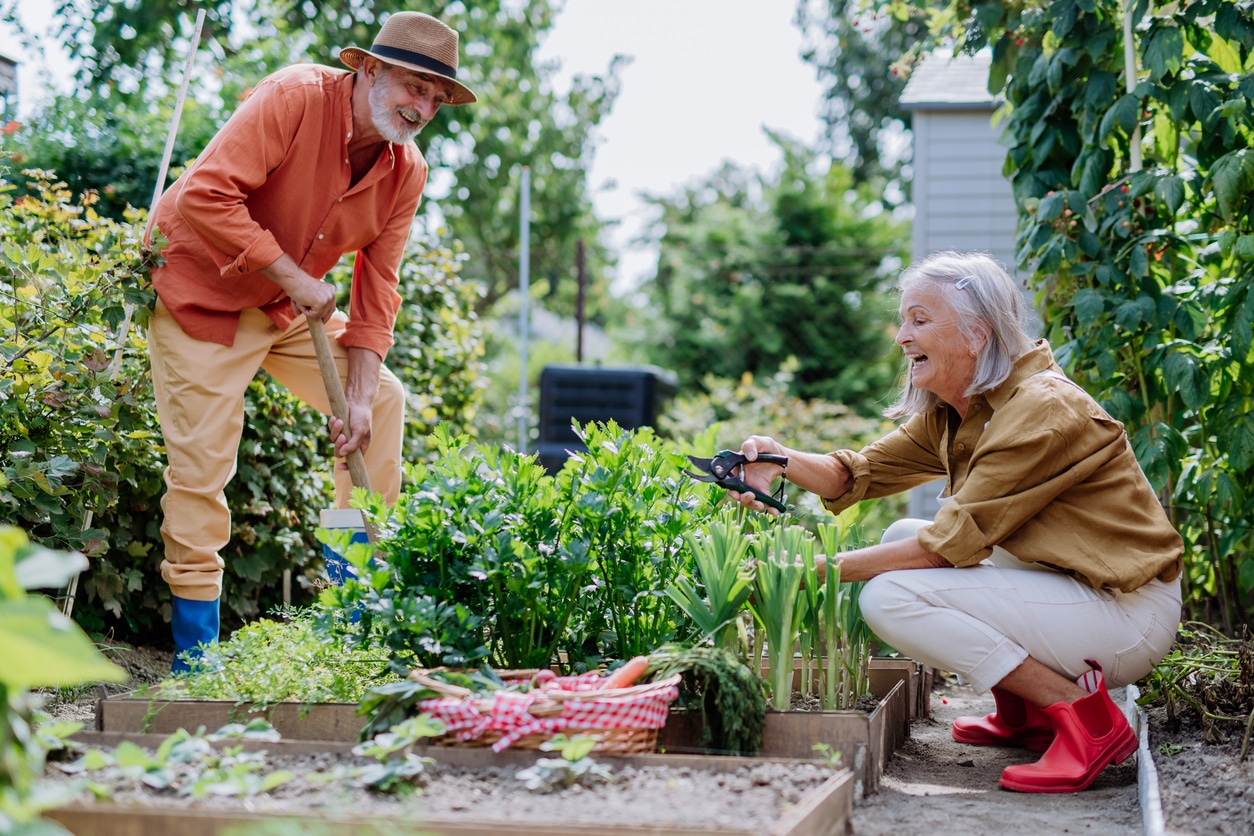

Goals
-
Improve balance and coordination
-
Strengthen muscles used in daily life
Examples
-
Standing leg exercises
-
Low step-ups
-
Gardening, lifting light pots
-
Balance work holding a chair
✔ Functional exercises reduce fall risk and improve independence (supported by geriatric rehabilitation studies).
🟠 Stage 3: Moderate Strength & Endurance
(Still safe, still controlled — no extremes)
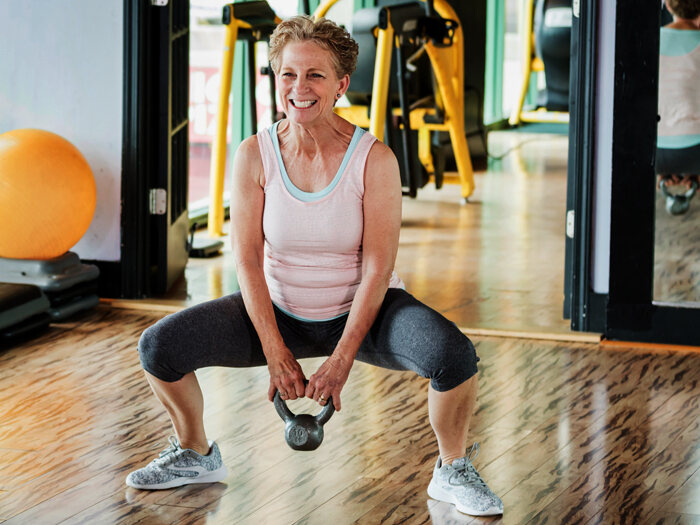
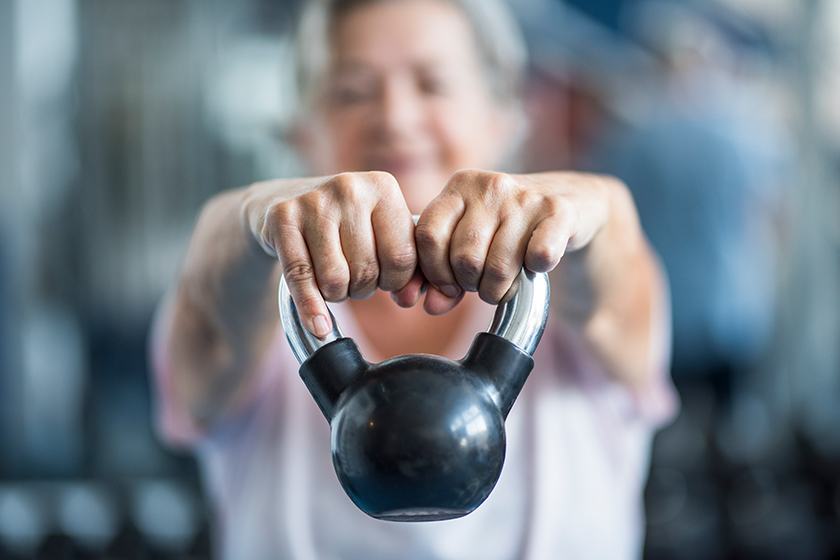
Goals
-
Maintain muscle mass
-
Support joints affected by arthritis
-
Improve metabolic health
Examples
-
Light kettlebell or dumbbell lifts
-
Resistance band rows
-
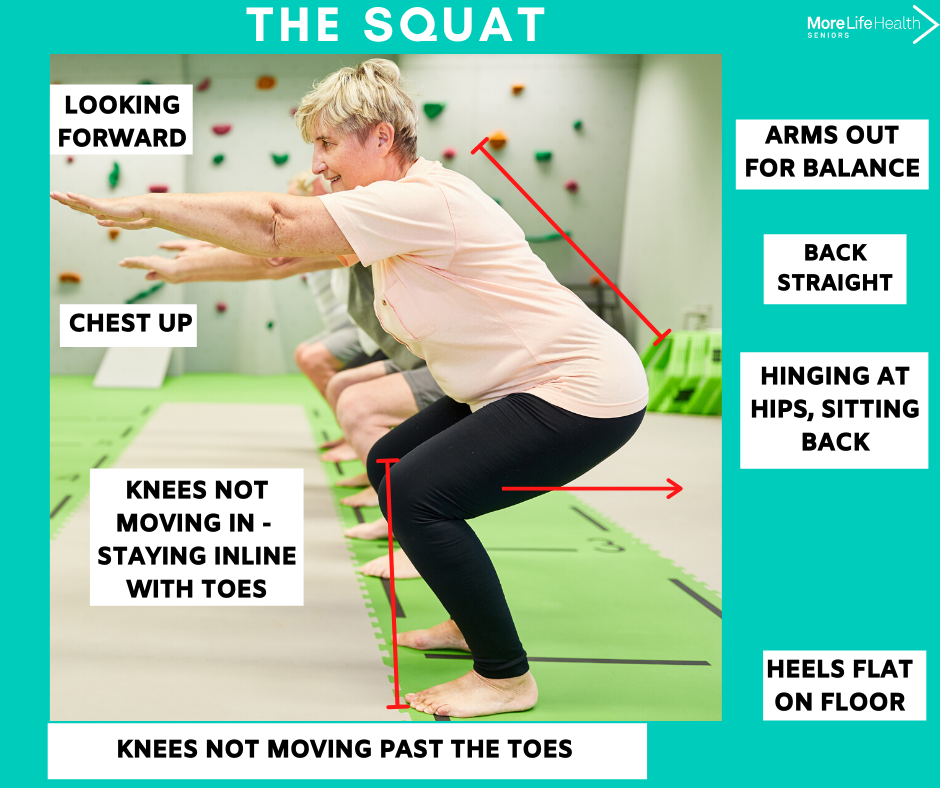
Supported squats or sit-to-stand
-
Short walking sessions with purpose
✔ Studies show moderate resistance training improves strength, insulin sensitivity, and joint stability in older adults.
🔵 Key Message (Visual Takeaway)


-
Exercise intensity is personal, not competitive
-
Progress slowly, based on how the body feels
-
Light exercise is good — progressed exercise is better
-
Avoid both inactivity and overexertion
Movement does not need to look impressive to be effective.
Consistency, creativity, and self-awareness matter more than speed, weight, or comparison.